


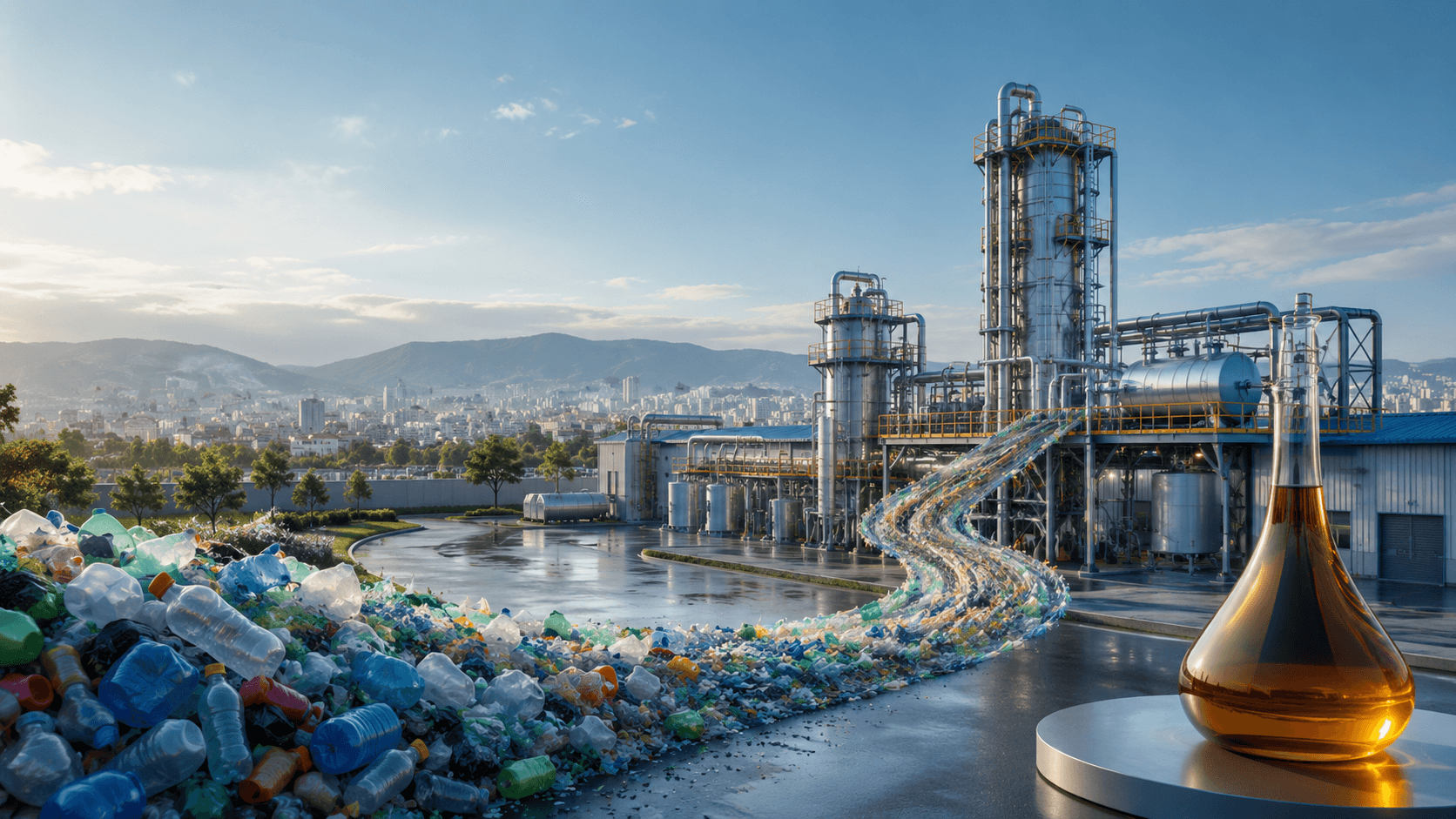
Mishandledplastic becomesnew crude oil.
Cirkova recovers the carbon locked in PET and plastic waste. In Gjilan, Kosovo, we close the loop — with pyrolysis instead of landfill.
- Oil yield
- 75%
- Capacity / year
- 8,230 t
- Continuous operation
- 24/7
Plastic doesn't disappear — it only disappears from sight.
A large share of plastic is never recycled. It's burned, buried, or ends up in nature — where it lingers for generations. In Kosovo, the infrastructure to do better is often simply missing.
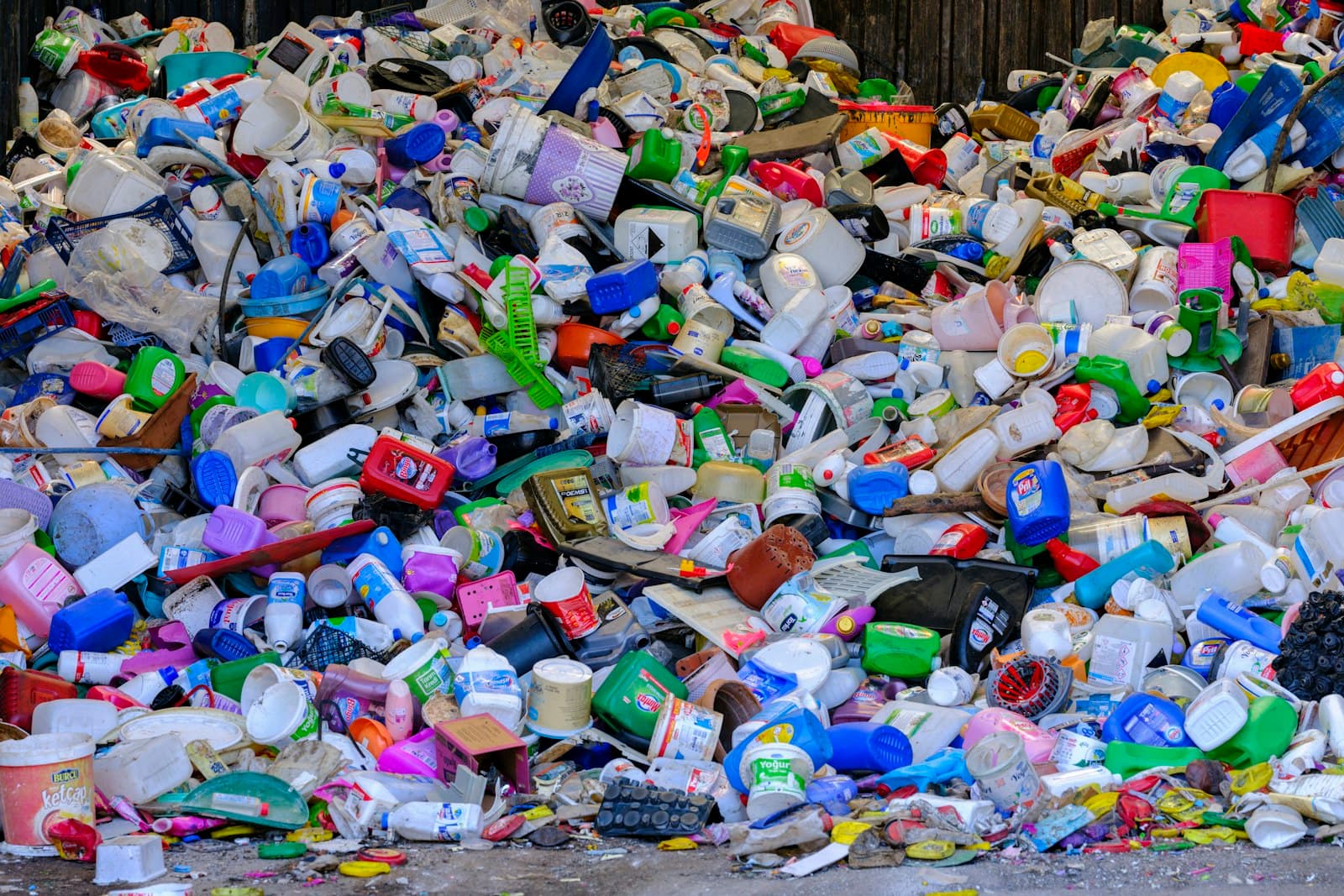
of plastic waste in Kosovo ends up unused in landfills or in the environment.
That's how long a single bottle takes to break down in the environment — it never truly disappears.
That much new plastic enters the oceans every year — and the trend is rising.
Five steps from waste back to raw material.
Cirkova combines proven sorting technology with continuous pyrolysis. Loose plastic waste becomes a cleanly condensed, synthetic crude oil.
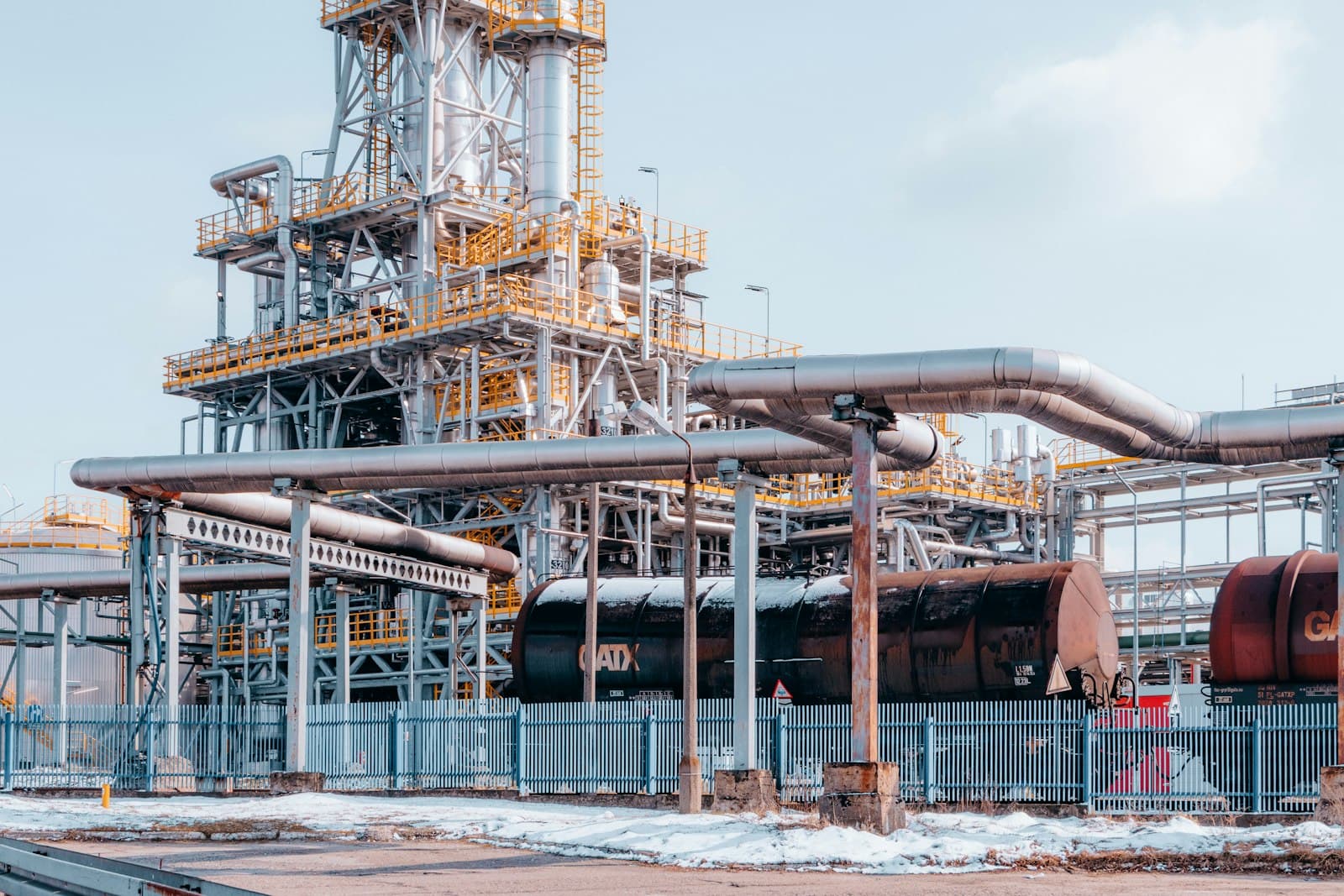
A closed loop: what begins as waste ends as raw material.
- 01
Collection
Improperly disposed plastic from the region is collected, weighed, and recorded digitally.
- 02
Sorting
Optical sensors and manual sorting separate PET, PE, and PP from contaminants such as metal, glass, and PVC.
- 03
Preparation
Shredding, washing, and drying turn the material into clean, uniform flakes.
- 04
Pyrolysis
In the absence of oxygen at 400–500 °C, the long polymer chains break apart thermally.
- 05
Crude oil
The resulting vapors condense into synthetic crude oil that re-enters the value chain.
A plant that thinks — and grows with you.
Modular, continuous, and energy self-sufficient. Our pyrolysis is built for real-world waste streams, not the lab.
Continuous pyrolysis
A modular reactor runs around the clock — without the downtime of conventional batch processes.
Closed energy loop
The process gas — around a fifth of the energy — heats the plant itself; a rooftop photovoltaic system covers the remaining power demand.
Emission control
Gas scrubbing, filters, and continuous monitoring (CO, CO₂, NOx, VOC) keep emissions safely below the limits.
High yield
Around 75% of the input becomes oil, about 20% process gas, and 5% solid carbon.
Full traceability
Every batch is documented digitally — from delivery to the finished end product.
Modular and scalable
Four pyrolysis modules form the first stage — CE-certified and expandable container by container.
What we process.
Cirkova specializes in mixed plastic streams — precisely where mechanical recycling reaches its limits.
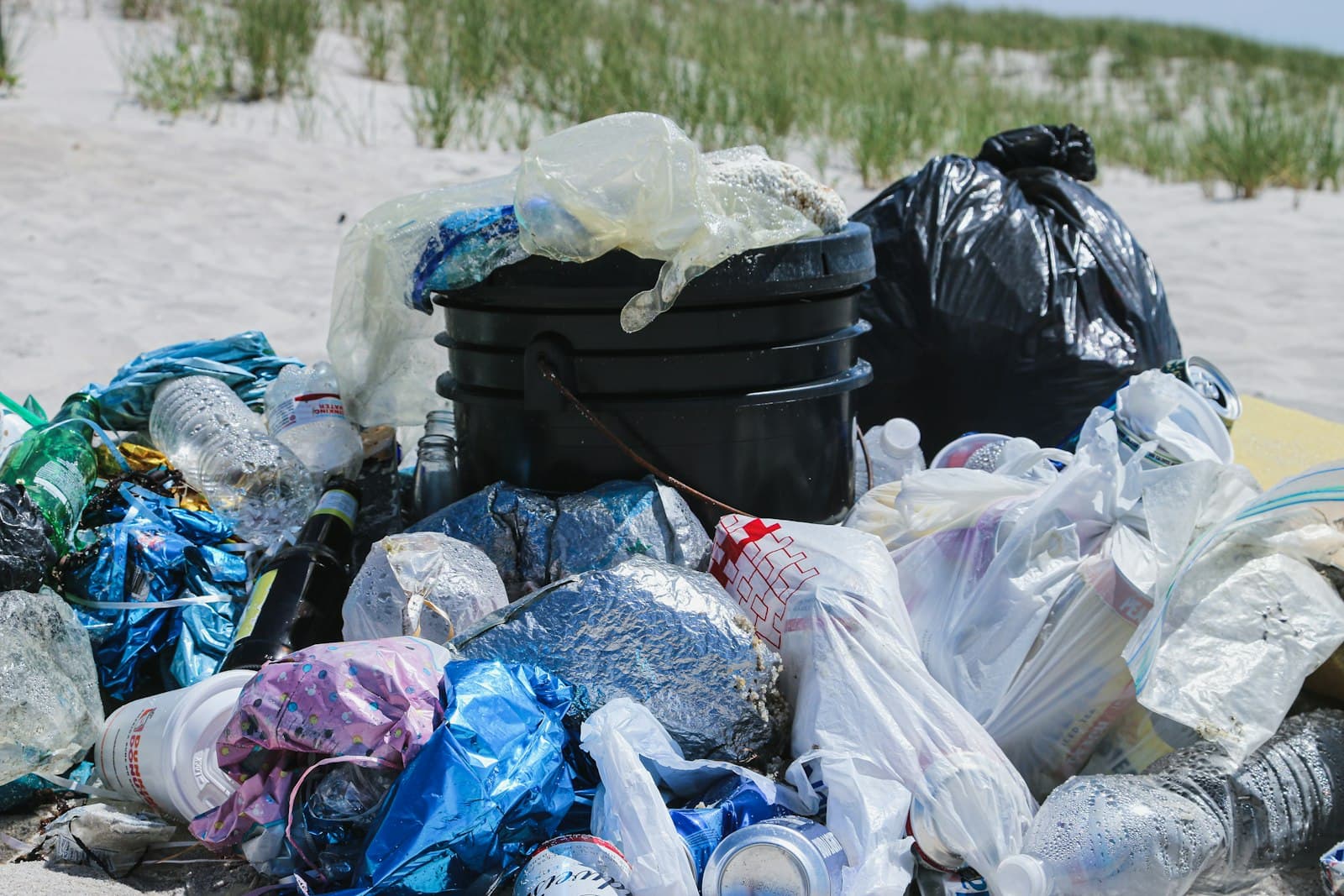
Beverage bottles and packaging — our core stream.
Canisters, bottles, and closure caps.
Films, bags, and flexible packaging.
Cups, closures, and household containers.
Foam and rigid packaging.
Measurably less waste. Measurably more circularity.
Cirkova's first expansion stage transforms the waste balance of an entire region — and creates jobs on the ground.
processed instead of landfilled or burned.
recovered as a secondary raw material.
of the input becomes usable oil.
modular and expandable on demand.
Figures for the first expansion stage — four modules in continuous operation.
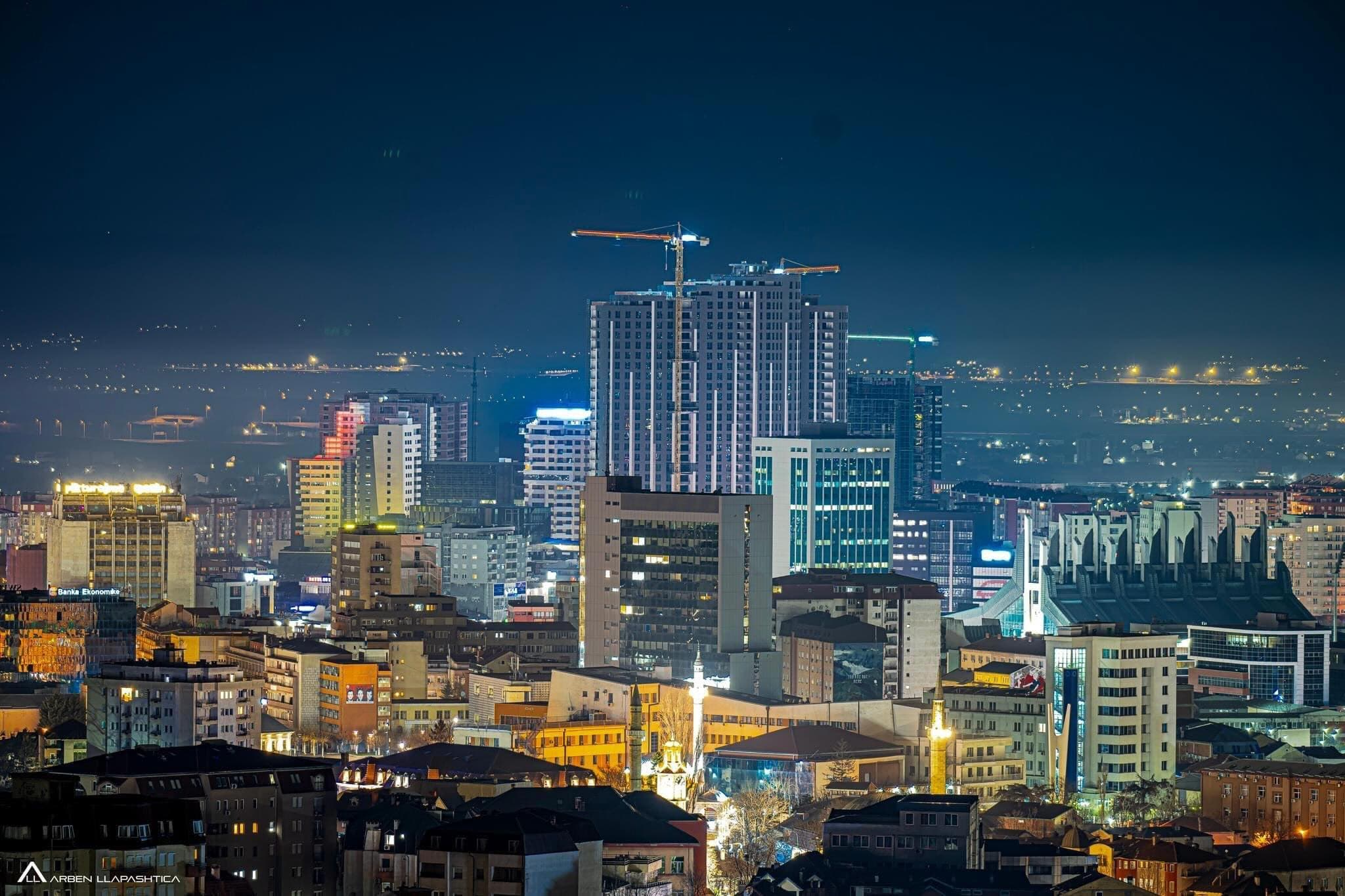
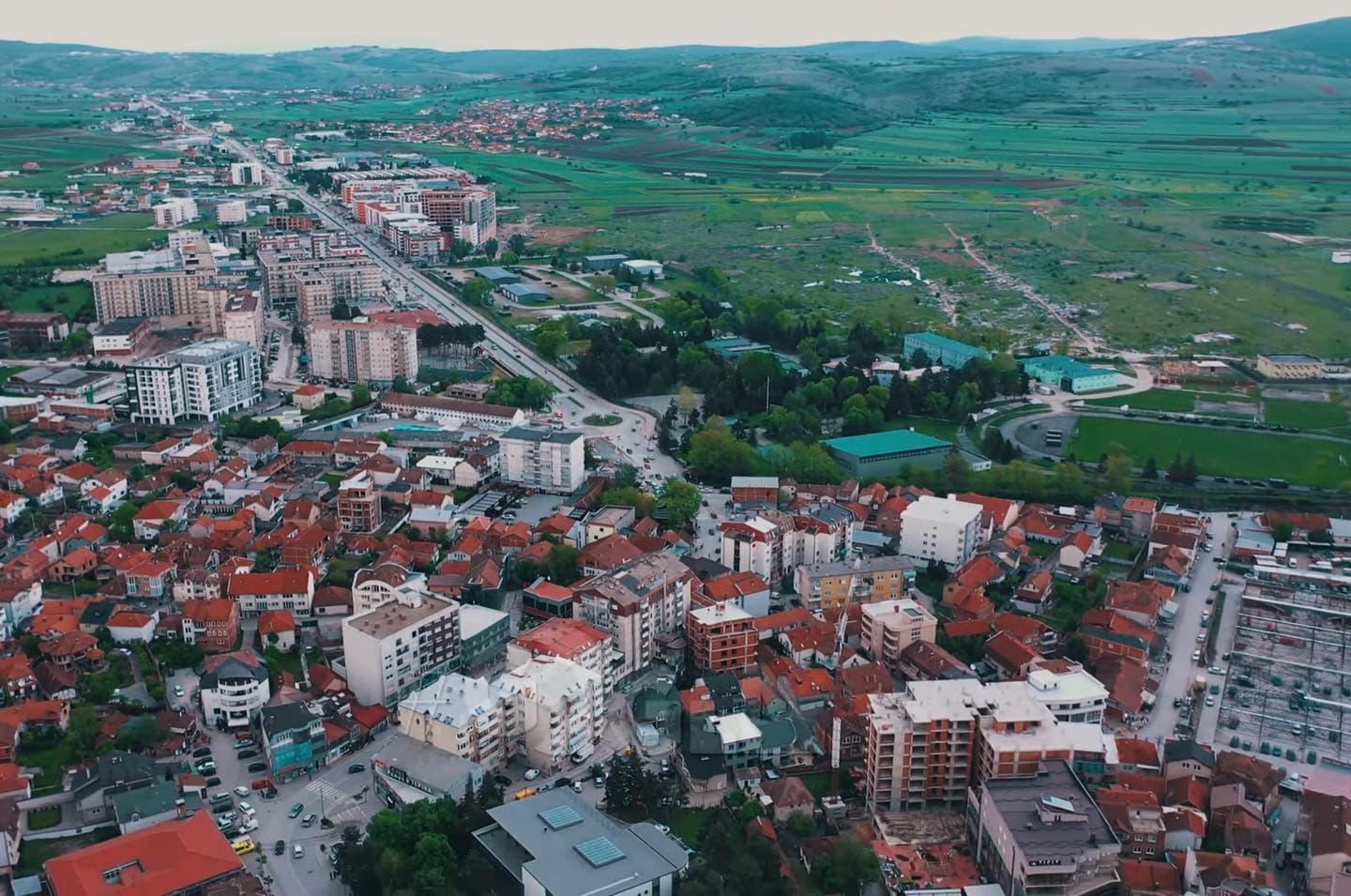
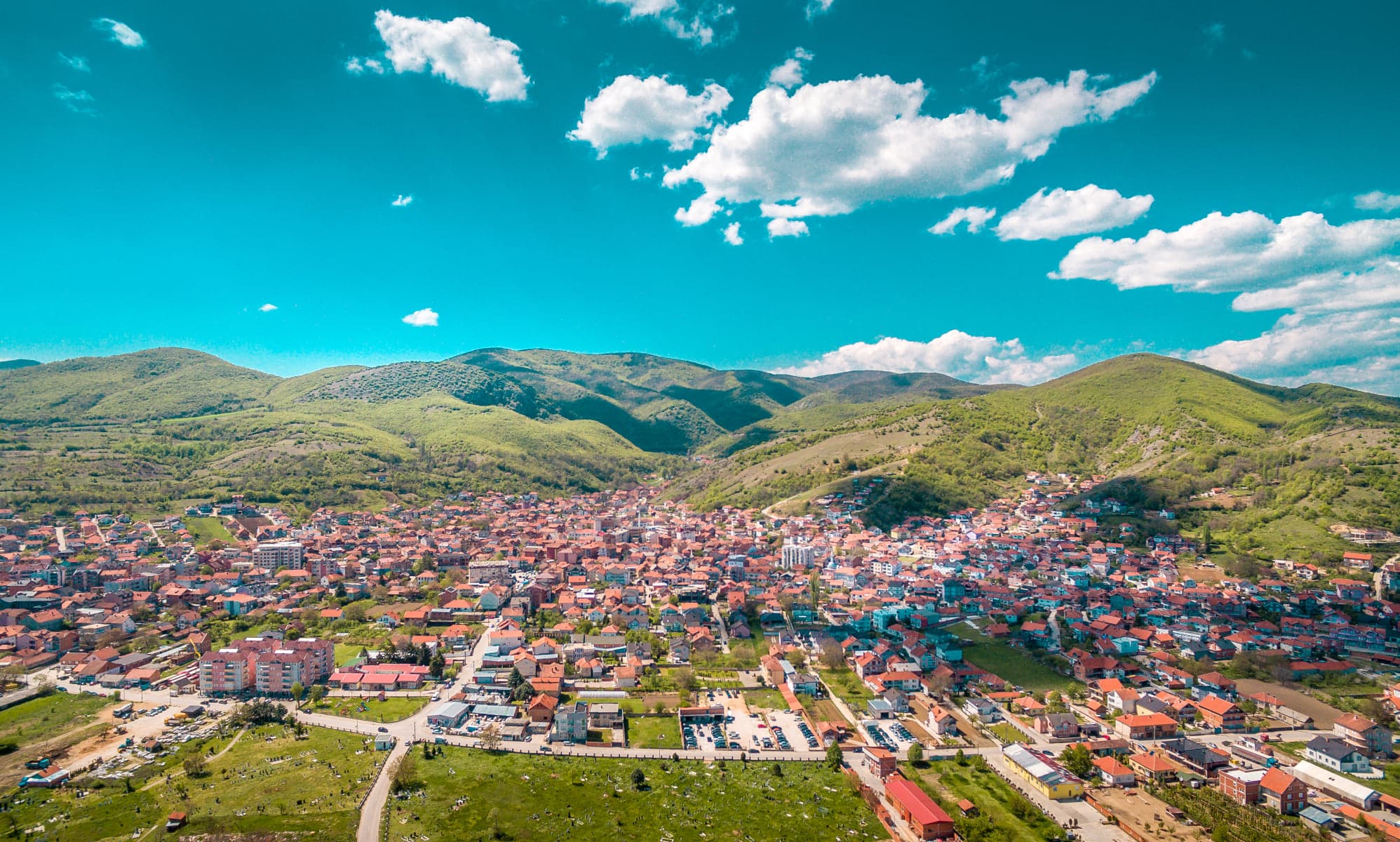
At home in Prishtina, Gjilan, Preshevo, Kosovo.
Cirkova is based in the industrial zone of Gjilan — in a region where most plastic waste has so far ended up unsorted in landfills or scattered across the landscape.
We don't see waste as an endpoint, but as a stockpile of raw materials in the wrong place. With chemical recycling, we recover the carbon bound in plastic and return it to the loop as crude oil.
As the first mover for chemical recycling in Kosovo, we create local value, jobs, and a visibly cleaner environment — the circular economy you can touch.
- Founded
- 2026
- Location
- Gjilan, XK
- Focus
- Chemical recycling
- Capacity
- 8,230 t / year
Carbon that stays in circulation.
Instead of a one-way street from product to landfill, Cirkova closes the loop — again and again.
Waste
Improperly disposed plastic is collected and declared a resource.
Recovery
Pyrolysis breaks the polymers down into synthetic crude oil.
New products
The oil becomes fuels and plastics once again.
Circulation
The carbon stays in use — instead of in the environment.
What you should know about the process.
The key questions about chemical recycling, the end product, and our plant.
Yes. Chemical recycling complements mechanical recycling where contaminated or mixed plastics would otherwise only be incinerated. The carbon stays in the loop instead of escaping as CO₂.
It serves as a secondary raw material for the petrochemical industry or is further processed into fuels. The process is designed for ISCC+ certification.
Pyrolysis runs entirely in the absence of oxygen. Multi-stage filters and gas scrubbing limit emissions, and the process gas is used internally for heating.
Primarily PET, PE, PP, and PS. Contaminants such as metal, glass, and PVC are reliably removed during sorting.
Because the need here is great: recycling infrastructure is lacking, and landfills keep growing. In the industrial zone of Gjilan, Cirkova creates local solutions and jobs where they are needed most.
Yes. Municipalities, collection points, and companies are welcome — just reach out to us through the contact form.
Let's close the loop together.
Whether you're a municipality, a collection point, or a company — we welcome every partnership. Drop us a line.